The lesser charges
Sir Fol. 98r Iohn Argent hath to his first wife, the Ladie Or, daughter and only heire of the Earle of Geules, by whom he hath issue a daughter named Azure, the Ladie Or abouesaid dieth without any other issue, Sir Iohn Argent hath to his second wife, Dame Sable the daughter and heire of the Earle of Vert, and hath issue a sonne: shall not the Gentlewoman Azure, first begotten beare her fathers Cote as heire, and her heires for euer? G. No, for the heire male hath gotten the fathers cote to him, & to his heires, although he were last borne. But she shall beare the same as a woman, but her mothers cote shee may beare, to her and her heires for euer. And yet be-cause it shall be knowne that she was the daughter of such a Gentleman, by the courtesie of Armes, she may beare her said fathers Cote, on the chiefe, vpon her mothers Cote, as appeareth in the Esco-cheon aboue blazed. Where ye shall see a chiefe a-boue a cote, and all but one Escocheon. Yet farther to instruct you in gentlewomens cotes. A gentle-women borne, wedded to one, hauing no cote Ar-mour, they hauing issue a sonne, which is termed in the Law of Armes, her sonne: The same sonne I say, may beare her cote armour, during his life, with a difference Cynquefoyle, by the curtesie of armes, and this is called a lased cote armour.
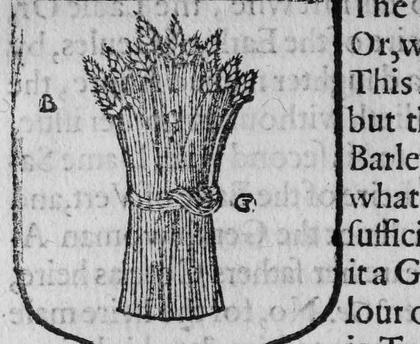 The field Azure a Garbe Or, with a bende Geules, This is a sheafe of wheate, but though it were Rye, Barley, or Comyn, or what soeuer it were, it is sufficient in blazon, to call it a Garbe, telling the co-lour or mettall, whereof it is. To make any commen-dation of this, it needeth not for all people praise it, that cannot liue with-out it.
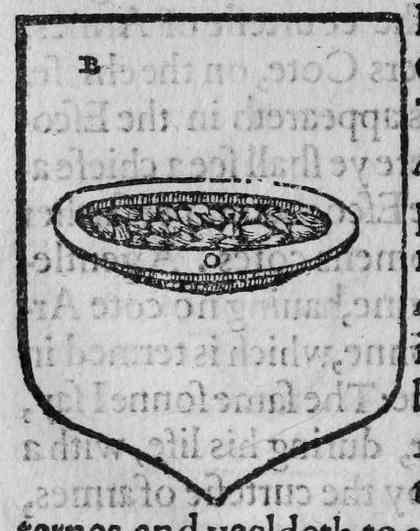 He beareth Azure, a Bason Or, filled with Oliues Vert. The tree of this fruit (as _Isi-dore_ writeth) is a Tree of peace, For so it well appea-red, whẽ the doue brought of the same to _Noah_, being in the Arke, in tokẽ of peace betweene God and man. _Marcianus_ saith. The Oliue tree holdeth in it self al bit-ternes, and yeeldeth to all other sweete sauour, and holesome foode. The Hebrew Rabbines assigne this to be the standerd of the Tribe of _Asser_, where-vnto they annexe his worde out of _Genesis_, he shall giue pleasure for a king.
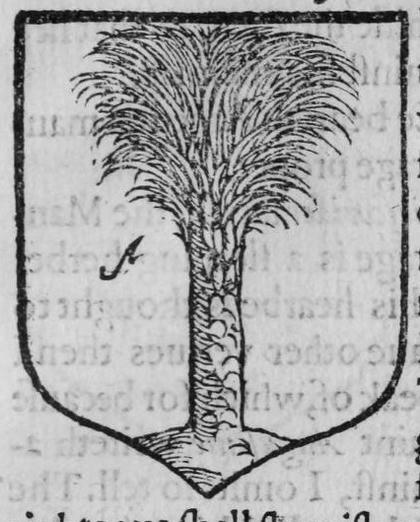 He beareath argent a Palm-tree Verte. This (as _Isidore_ writeth) is a tree of victory for all the victorious prin-ces in the olde time retur-ning from great battels & mightie enterprises, bare Palme in their triumphs. This tree is noble, faire & greene continually, wher-fore _Dauid_ saieth, that the righteous shall flourish as the Palme tree, which is to be vnderstanded for euer.
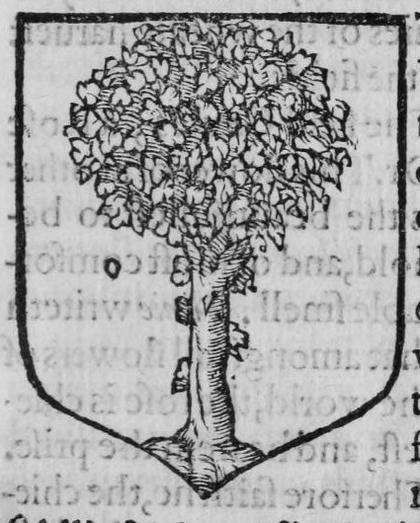 The field Or, an Oke tree, Verte. _Plinie_ writeth, that this is apt for mighty buil-dings, for the strength ther-of. Whereto assenteth the Prophet _Amos_. _Ouid_ saieth, that this tree was hallowed to _Iupiter_, & that the Akhorns were the foode of man, as bread is nowe. Besides, it is mani-foldlie spoken of in the scriptures. Whereof I note one: when the children of Israell was oppressed of the Madianites, the Angell of the Lorde sate vnder an Oke, and said to _Gedeon_, the Lord is with thee, thou mightie man of warre. Whereof I take it that he was made Gods liuetenant vnder Fol. 99v vnder an Oke tree, to signifie the strength that hee should haue in fighting against his enemies.
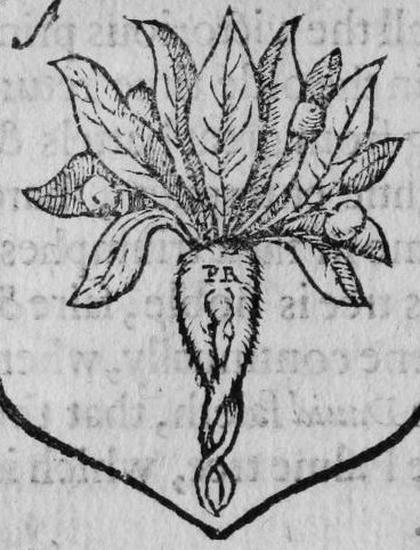 He beareath Argent, a man-drage proper. _Dioscorides_ saieth, the Man-drage is a sleeping herbe. This hearbe is thought to haue other vertues then I speak of, which for because Saint _Augustine_ writeth a-gainst, I omitt to tell. The Hebrew Rabbines say, this was the standerd of the trib of _Ruben_, writing vpon _Genesis_, where it is sayde _Ruben_ went out, in the daies of the wheate haruest and found _Mandragora_ in the fields.
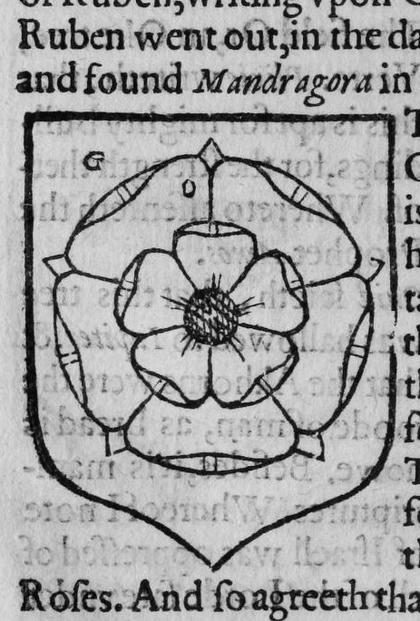 The field Geules, a Rose Or. This flower of al other is the beautifullest to be-hold, and of most comfortable smell, _Plinie_ writeth that amongst all flowers of the world, the rose is chiefest, and beareth the prise. Therfore saith he, the chiefest part of man (which is the head) is crowned with Roses. And so agreeth that is written in the booke of Wisdome, Let vs crowne our selues with Roses, meaning with the sweete smel of heauens ioies. Of this golden Rose I could say more, but because it is romish I put it off.
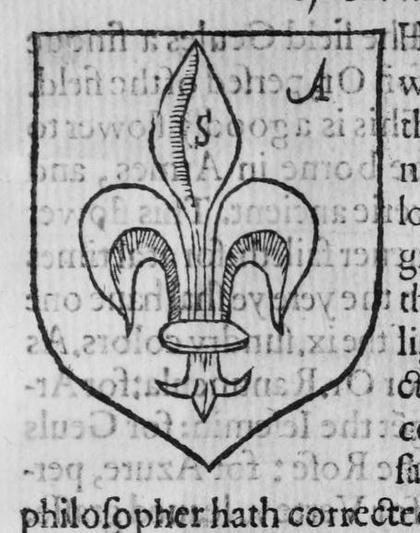 Hee beareth Argent a flo-wer deluse sable. Although this be of colour sable, yet naturally it hath all the co-lours of a Rainbow, which giueth vnto the behoulder thereof a maruellous de-light, and yet is not dele-ctable in smel, but the root conteineh in it, a sweete sauour, especially when the philosopher hath corrected in it nature, & yet most terrible of taste, The leafe, as it is like vnto Gods rodde, so is the sauor thereof, noisome to the head and yrkesome to the stomack of man, The French Herehaughtes do write, that God sent it vnto their king, by an angell, in token of continuall tribulati-on. Whither their owne wordes haue proued true, I refer it to the iudgement of such as haue read their owne Tragedies, Wherein he shall find them bea-ten, with the same onely, for rebelling against their naturall liege Lords the Kings of England, I could write more, but sith it accordeth not to my purpose I will herewith leaue off, and returne to the flower deluce, telling you, that you shall learne by it, that whẽ things are borne in their naturall colour: then hath the first bearer, somthing in him, correspondent to the natural propertie thereof. But when they are altered from their proper colours, then is there to be considered, either the addition or substraction. And so take this for a general rule of al other things.
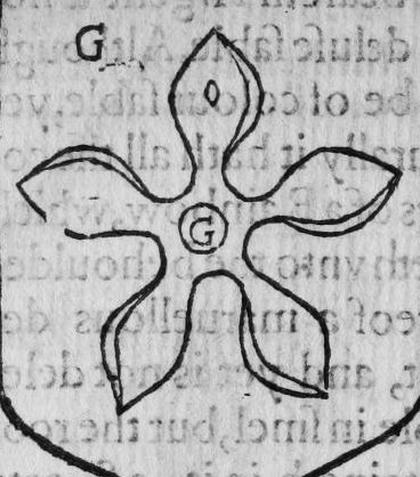 The field Geules a sinque foil Or, persed of the field. This is a goodly flower to be borne in Armes, and verie ancient. This flower neuer faileth, for at al times in the yere ye shall haue one of the ix. sundry colors. As for Or, _Ranuncula_: for Ar-gẽt the _Iesemin_: for Geuls the _Rose_: for Azure, per-winke: for Sable dwale: for Verte v. leaued grasse: for Purpure buglasse: for Tenne popy: for Sanguin the stock gillyflower, which colours are contained within the number of the Sinquefoile aforesaide. Therefore esteeme this number with the flower, as worthy of bearing. For he that beareth the same should haue his fiue wits, as tasting, hearing, seeing, touching & smelling, at his own wil and wisedome to vse thẽ to Gods wil, as _Dauid_ saith, The iust mans life shal neuer wither, so shal the vertuous bearer of this flower neuer be vanquished.
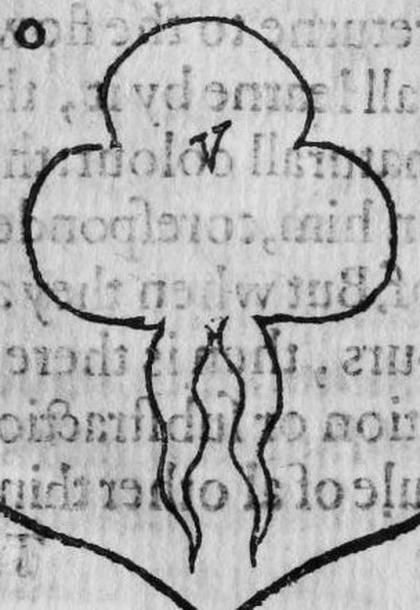 He beareath Or, a Tressoile, double slipped Verte. This herbe is a speciall foode to all cattell, much nourishing them, whereby a man is the better fedde. As this herbe continueth alwaies greene so should the bearer thereof continue in vertue & right-uousnesse, for so as _Dauid_ saith, Fol. 101r saith, He shal flourish as the greene leafe. This leafe may be taken for the vnion of three in one substãce. Here I wil shew you a secrete of surgery, that is, if any member of a man bee cleane cut from other, with this leafe I will ioine them together, as though they had not bin seperated.
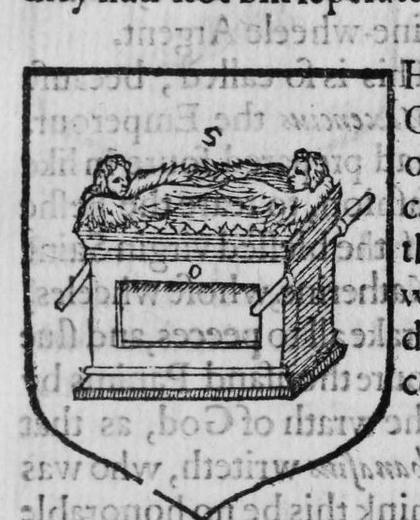 He beareath Sable, an Arke Or. This was the standerd of the hoste of _Leuites_, be-cause they had the charge thereof. To what vse, this was ordained the scripture doth declare, wherefore I cease of that.
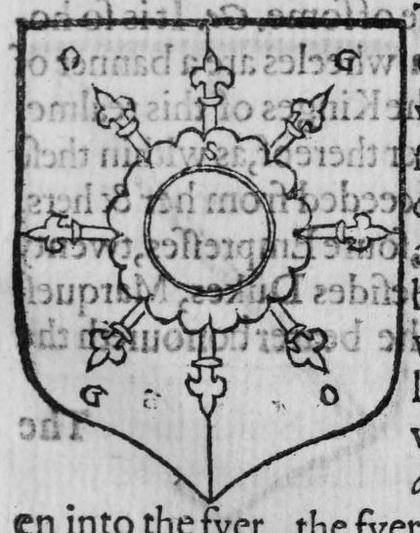 The field quartered Or, & Geules, an Escarbuncle, with eight staues, nowey stuered Sable. The Carbũ-cle is a most precious stone and shyneth as fyer with beames and not darkened with the night, but is most like vnto a sunne beame, or vnto a flame of fire. As _Isi-dore_ writeth, if it be throw-en into the fyer, the fyer seemeth to be quenched, or as the coles were ded.
Fol. 101v And if water be cast thereupon, then is it hote as fire, if it be grauen, it neuer deliuereth any figure perfeclie into wax or other thing, disdaining as it see-meth to be put to so meane an vse.
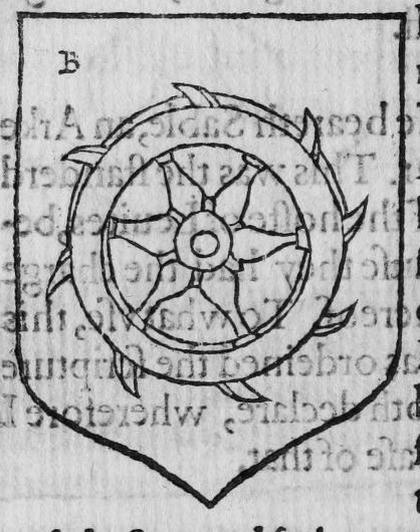 He beareath Azure, a kathe-rine-wheele Argent. This is so called, because _Maxencius_ the, Emperour, had prepared foure in like fashion, to teare the fleshe of the blessed virgin Saint _Katherine_, whose wheeles, brake all to peeces, and slue foure thousand Panims by the wrath of God, as that old doctor and father _Athanasius_ writeth, who was her schoolemaister. **Le.** I think this be no honorable armes, although it be borne of some. **Ge.** It is so ho-norable, that the Katherin wheeles are a banner of honour appertaining to the Kings of this realme. For such was the first bearer thereof, as within these 200. yeres, there hath proceeded from her & hers, by birth three Emperours, foure Empresses, twenty one kings & xv. Queens besides Dukes, Marques-ses, and Earles. So that the bearer honoureth the thing that is borne.
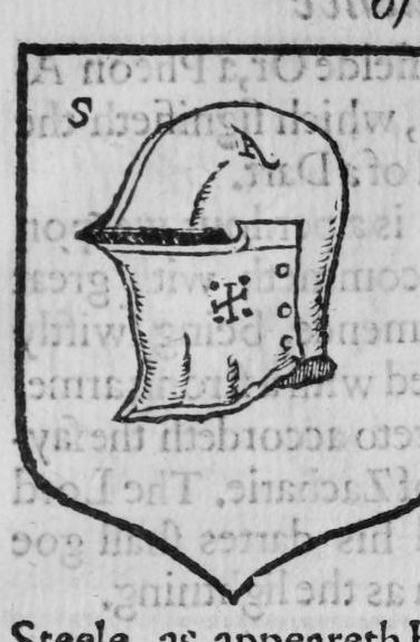 The field is Sable, a Helme Argent, Helmets haue bin vsed of diuers fashions and of diuerse mettalles, but the auncienst were of brasse, as appeareth in the first booke of kings. When _Dauid_ should fight against _Goliath_, _Saul_ did set a Hel-met of brasse vpõ his head. After they were made of Steele, as appeareth by that is written, in the first booke of Machabees where King _Antiochus_ had a thousand men with Helmets of Steele, vpon their heades.
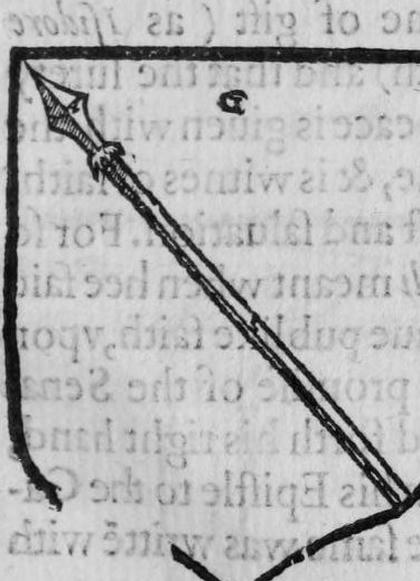 He beareth Geules a Lance Argẽt, with the shaft sable. The Hebrue Rabbies, writ vpõ Numery that this was the Standarde of the tribe of _Simion_,
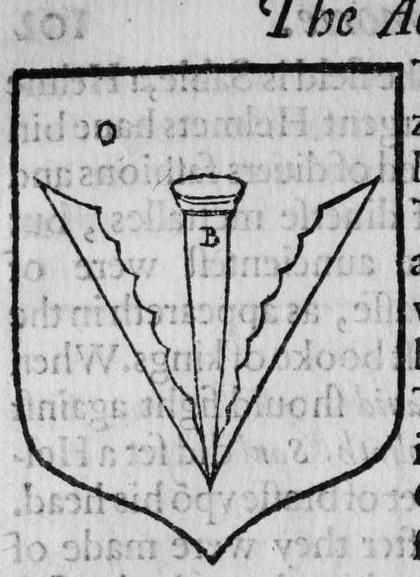 The fielde Or, a Pheon A-zure, which signifiest the head of a Dart. This is a per ilous weapon and commeth with great vehemence, being swiftly hurled with a strong arme. Thereto accordeth the say-ing of _Zacharie_. The Lord God his dartes shall goe forth as the lightning.
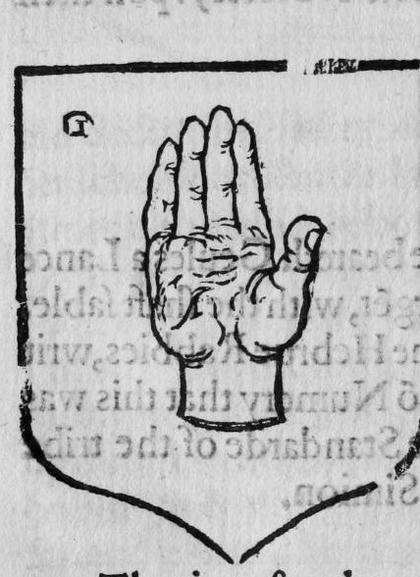 The fielde Geules, a right hand in pale, Argent. The right hande hath the name of gift (as _Isidore_ sayth) and that the surety of peace is giuen with the same, & is witnes of faith, trust and saluation. For so _Tulli_ meant when hee said I gaue publike faith, vpon the promise of the Sena-tors. That is to say, he offered forth his right hand, as a pledge thereof, _S. Paule_ in his Epistle to the Ga-lathians, mentioneth that the same was writtẽ with his owne hand.
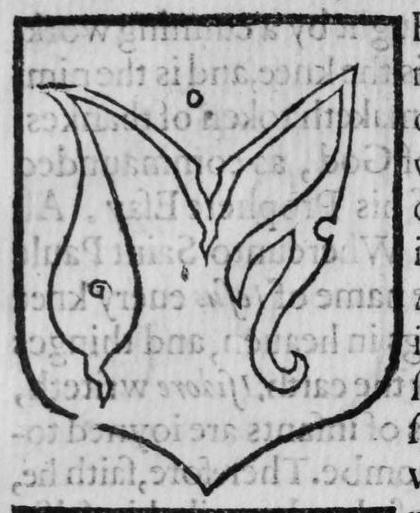 He beareath Or, a Manche maltale Geules. Of things of antiquirie, that are gro-wen out of fashion, this is one, which hath bin, and is nowe taken for a sleeue. And that may well be, for in olde Arras clothes you shall see garmentes with sleeues, not much wrought vnlike to this fashion, but nowe much altered from the same, For fashions and times do go together.
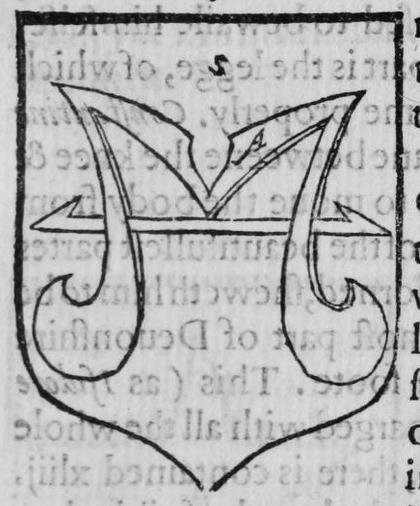 He beareth Sanguine, a Gorge, Argent. Though e vnlikely to be a water budget, yet hath it long time bin so taken, & so blazed, & neuer of anie other fashion, then ye see in this escocheon.
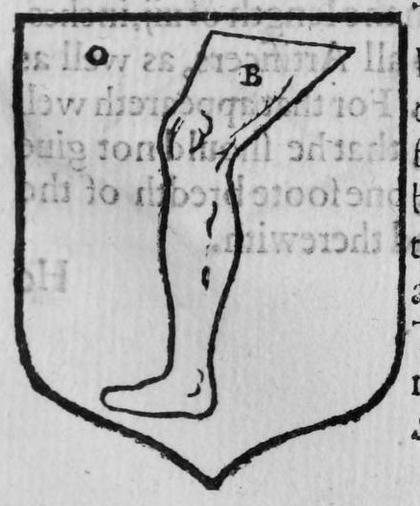 The field Or, a leg Azure. In this part of man is con-teined iiij. members. The first whereof, is the thygh, being as _Isidore_ saith, beau-ty & strẽgth, to the vpper and neather parts of man. The same likewise is wit-nessed in the Balades of _Salomon_. The thigh is like a faire Fol. 103v a faire iewel which is wrought by a cunning work-maister. The second part is the knee, and is the nim-blest, and with bowing, maketh token of thankes, for all benefits receiued of God, as commaunded thereto by the mouth of his Prophete _Esay_. All knees shall bow vnto me. Whereunto Saint _Paule_ agreeth, saying: that in the name of _Iesus_ euery knee should bow, both of things in heauen, and things in earth, and things vnder the earth. _Isidore_ writeth, that all the knees and eyes of infants are ioyned to-gether in their mothers wombe. Therefore, saith he, man is neuer better disposed to bewaile himselfe, then kneeling. The third part is the legge, of which all the whole hath the name properly. _Constantine_ saith, that the legge is meane betweene the knee & the foote, whose office is to moue the body from place to place, and is one of the beautifullest partes of man, and being well adorned, sheweth him to be strong, as appeareth in most part of Deuonshire men. The fourth is in the foote. This (as _Isidore_ sayeth) is the lowest, & charged with all the whole bodie. _Constantine_ writeth, there is contained xliij. bones, which are al within the length of xij. inches. The foote is a measure to all Artificers, as well as of Land, stone, & Timber. For that appeareth well by Gods saying to _Moses_, that he should not giue to the children of Israell, one foote bredth of the costes of Seire, and so I end therewith.
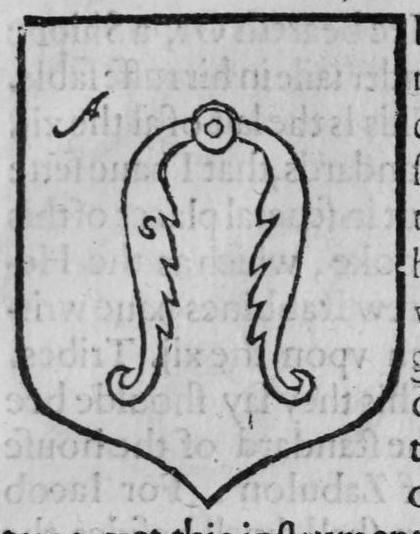 He beareath Argent, a Bar-nacle Sable. This is the chiefest instrument that the smith hath, to make the vn-tamed horsse gentle. For he holdeth him by the boca with the same, and so brin-geth him by art to yeeld to order. So _Aristotle_ writeth that although the nature of the horsse, is not to bee tame, yet this instrument made by art, maketh him obedient.
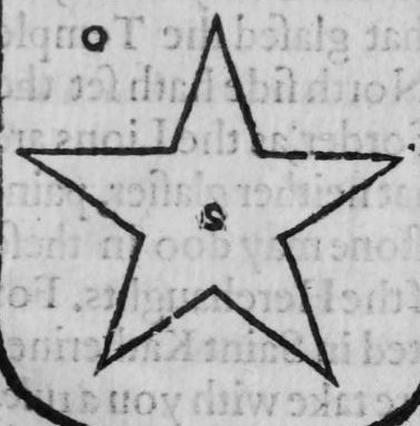 The field is Or, a Mullet of v. points Sable. This is as much to be vn-derstand, as a spotte discen-ded from height and di-sperpled into fiue ends, out of one droppe. This may be also of vij. pointes, but of no more.
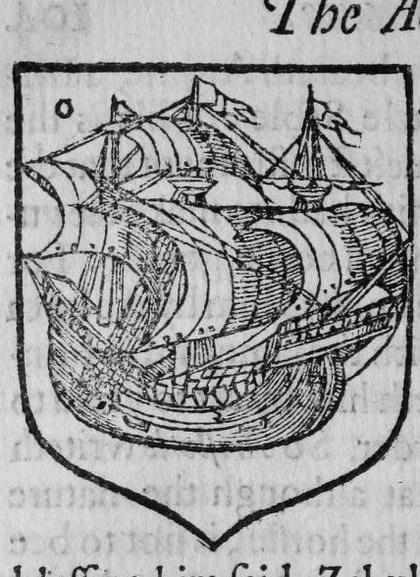 Hee beareth Or, a Shippe vnder saile in hir ruffe sable. This is the last of al the xij. standards, that I haue sette out in seuerall places of this booke, which as the He-brew Rabbines haue writ-ten vpon the xij. Tribes. This they say shoulde bee the standard of the house of _Zabulon_. For _Iacob_ blessing him said, _Zabulon_ shall dwell besides the hauen of the Sea, and nigh the hauen of ships.
And here in this escocheon is to be noted, that my cutter hath done a fault, for he hath set her goo-ing out of the field, which nothing ought to do that is mooueable. Yet workemen that be not skillull in this art, do commit the like faults very often, as for example, The Glasier that glased the Temple Church windowes on the North side hath set the Armes of England so out of order, as the Lions are going out of the field. So that neither glasier, pain-ter, nor any that cutteth in stone may doo in these things without the aduise of the Herehaughts. For the like fault also is committed in Saint Katherines Church vpon a toombe, Here take with you a rule, that nothing may be set with the head downward.
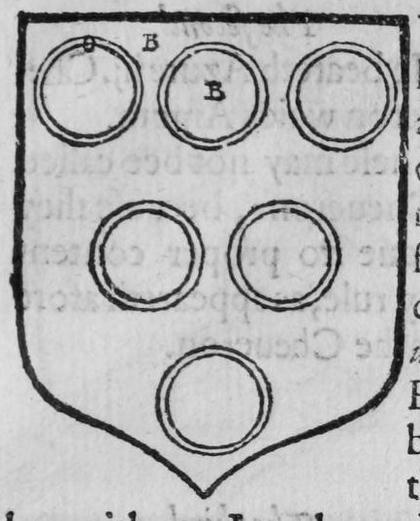 The field Azure vj. Anne-lets, iij. ij. and j. Or. These are suposed to be the rings of maile, which was an ar-mour of defence long be-fore hardnes of stee le, first deuised by _Midas Misimi-us_, and was then called an Habergion, for the nim-blenesse thereof. **Le.** For all these paines you haue ta-ken with me, I am bound to giue you most hartie thankes. **Ge.** depart not yet, for you lacke the ninth part of your errand. Therefore for that I will haue you perfect, I will shew you nine difficult cotes to blaze, of the which this is the first.
The first.
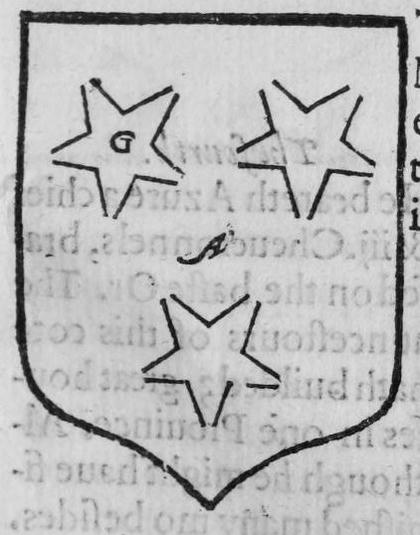 The field is Argent, three Mollets Geules blemish-ed. Here you must not say, the points rebated, because it is nothing of force.
Fol. 105v The second.
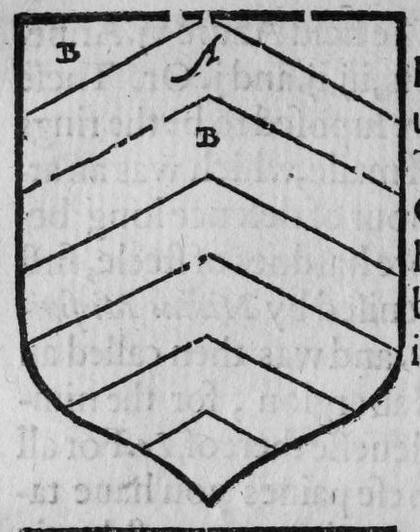 He beareath Azure iij. Che-ueron waies Argent. These may not bee called Cheuerons, because they haue no proper content by rule, as appeareth afore in the Cheueron.
The third.
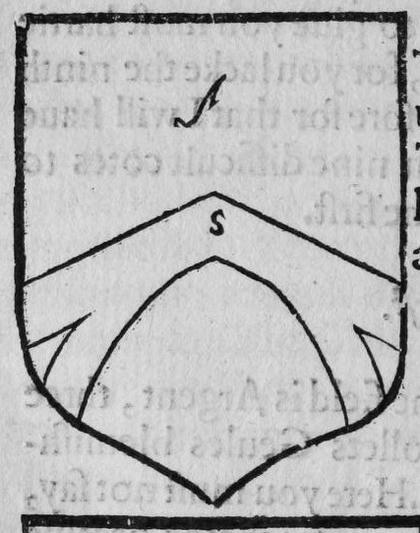 The fielde Argent a Che-ueron cnarched Sable. The ancestors of this cote haue done some notable act in the art of Geometry.
The fourth.
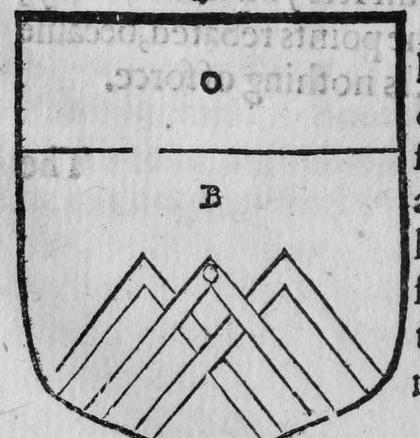 He beareath Azure a chief & iij. Cheueronnels, bra-sed on the baste Or. The auncestours of this cote hath builded 3. great hou-ses in one Prouince. Al-though he might haue fi-nished many mo besides.
Fol. 106r The fifth.
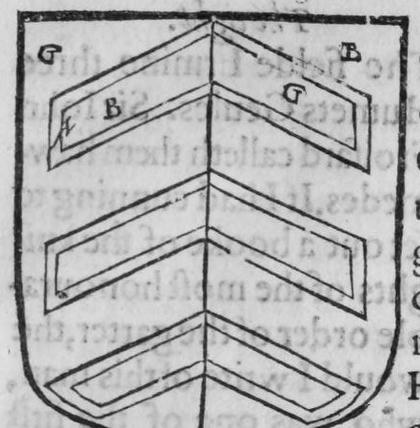 The field parted per pale, Geules and Azure, three Cheuernes, Humets cou-terchanged, Pursled Ar-gent. Yee cannot say bor-dured, because nothing may be bordered, that is Humette within the esco-cheon.
The sixth.
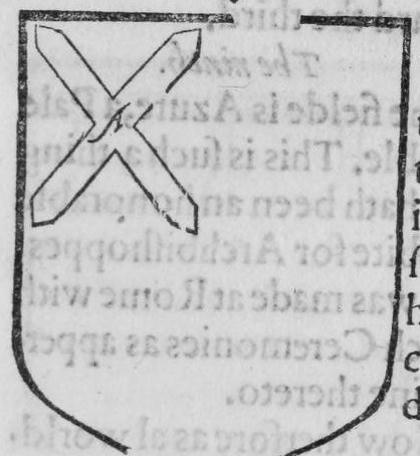 The field Argẽt on the dex-ter point, a Saltier vmbra-ted. The meaning whereof is that the same is but as the signe of a saltier. If the Here-haught haue meede for this cote, it is more then nee-deth.
The seuenth.
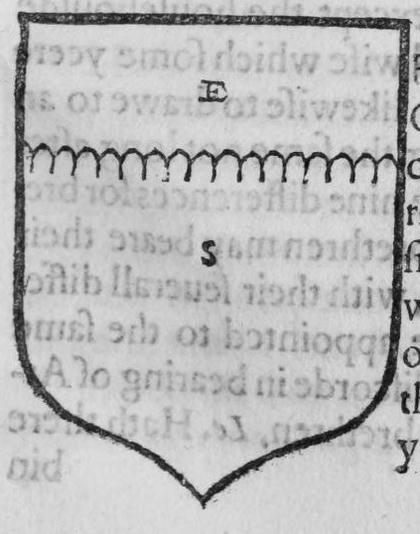 He beareath sable enuectẽd Or, a chiefe Ermine. This cote I had in the Monaste-rie of Saint Katherins be-sides the Towne of Rone which for the rarenes ther-of I tricked. I thinke surely that among a thousande, you shall not see one such.
Fol. 106v The eight.
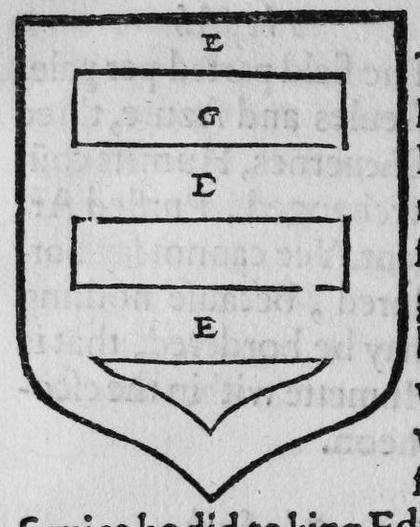 The fielde Ermine three Humets Geules. Sir _Iohn Froisard_ calleth them haw-medes, If I had cunning to set out a booke of the kni-ghts of the most honoura-ble order of the garter, thẽ would I write of this man, who was one of the first founders, and of the noble seruice he did to king _Edward the third_.
The ninth.
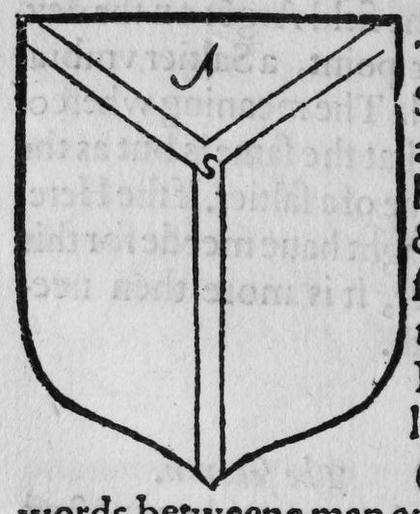 The fielde is Azure, a Pale Sable. This is such a thing as hath been an honorable habite for Archbishoppes, & was made at Rome with such Ceremonies as apper-taine thereto. Now therefor as al world-lye things haue an ende (except the householde words betweene man and wife which some yeere hath three endes) I thinke likewise to drawe to an end of this book, finishing the same not long after that I haue told you of the nine differences for bre-thren. I meane so as nine brethren may beare their father cote in his life time, with their seuerall diffe-rences, of auntient time appointed to the same entent that there rise no discorde in bearing of Ar-mes, especiallie amongest brethren. **Le.** Hath there bin Fol. 107r bin controuersie, for bearing a like? **Ge.** Many, a-mongest which, one of them, Sir _Iohn Froysarte_ writeth of a challenge, made by Sir _Iohn Chandos_ English, to the Lorde _Cleremount_ French, for bearing Azure, our Ladie in the Sunne Golde, which was tryed by them, at the end of the battaile of Poytiers, where _Cleremount_ was slaine, & loste his hanner by right of Armes, whereof I leaue pur-posing to proceede to tell you of nine sundry differences of brethren as followeth in order, where-of I warne you to giue good heede.
The first.
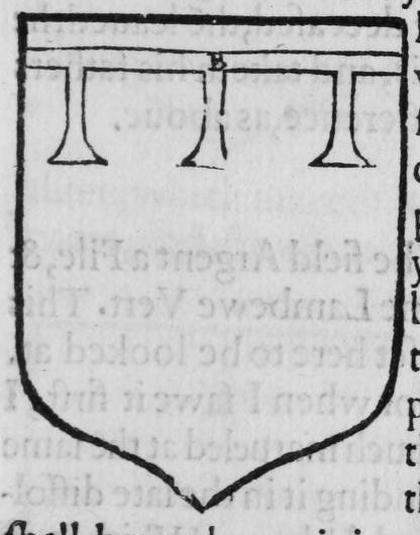 He beareath Argent, a syle with iij. Lambeaux Azure, for a difference. Some will call them a Labell of three pointes, which I referre to your iudgment, whether it be better said, a file with iij tongues, or a tonge of three pointes, because therefore that you may vnderstande the matter the better, you shall haue the opinion of writers. _Vpton_ calleth them points, such as appertaineth to mens garmẽts saying, that they may bee borne to the number of nine, either euen or odde. _Budeus_ affirmeth, that they are tongues, and may not be borne but odde. _Alciatus_ writeth, that they are plaites, or ploytes of garmentes. _Barthole_ calleth them Candelles. Thus because they are most auncient authors, and cannot agree among themselues, being Iudges of Fol. 107v these matters, I leaue them, and say to you that this is the first of the nine differences of brethren, and is for the heire and eldest sonne. _Honorius_ sayth, that one of these lables betokeneth the father, the other betokeneth his mother, the middlemost is borne for himselfe.
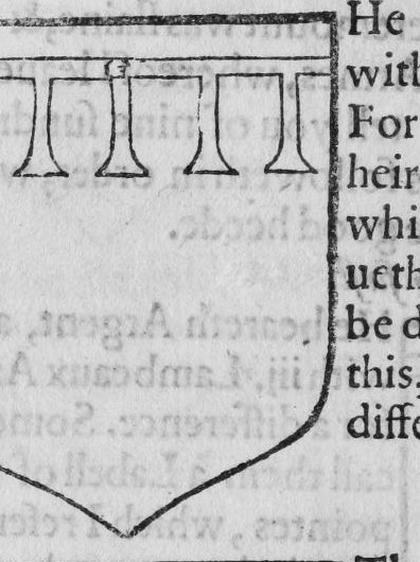 He beareth Argent, a file with v. Lambeaux Geules. For the difference of the heire aboue mentioned, whilst the grandfather ly-ueth. But if his grandfather be deceased, thẽ leaueth he this, and taketh his fathers difference, as aboue.
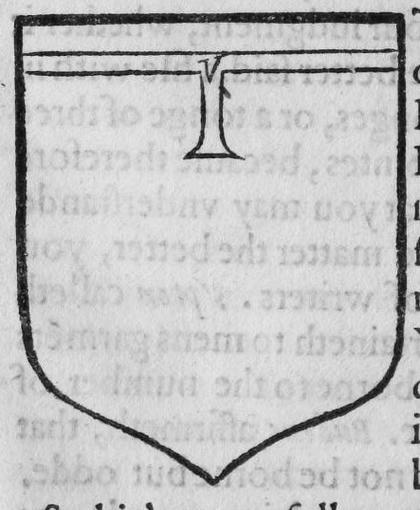 The field Argent a File, & one Lambewe Vert. This I set here to be looked at. For when I sawe it first, I much marueled at the same finding it in the late dissol-ued Abbey of Whitbee, in Yorkshire, in 2. sundry pla-ces of the same abbey. As in glasse, on stone, & Tim-ber. I tooke the trick ther-of, which was as followeth. Geules a Lyon Saliaut Argent, oppressed with two barres Or, a Fyle, and one Lambew Vert, for a difference as I take it.
Fol. 108r The cote appertaineth to the name of Playstowe, as is to be founde in the Church of Clapham, foure miles from London, but that hath not this diffe-rence in it.
The second.
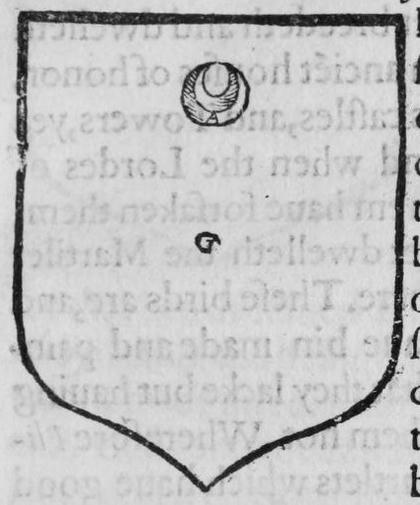 He beareath Geules, a Cressant Argent, For a differece of a second brother. The cressant is the moon from the day of prime, for that being the thirde after the change, then she increaseth so hath he that beareth this difference. For the father, the heire, and the second brother are the number of three, which maketh an increase to the house and name, and therefore beareth he this token.
The third.
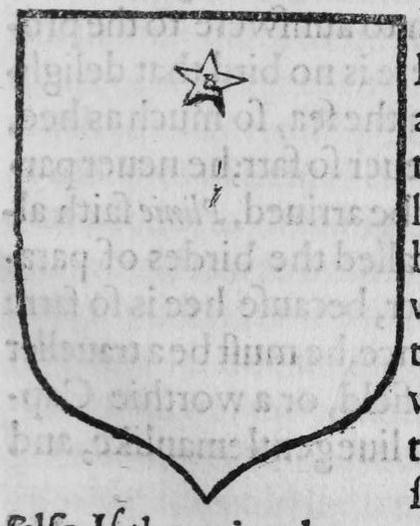 He beareth Argent a Mol-let of v. pointes, Azure for a difference of a third bro-ther. As a Mollett is a softe lumpe, descended from a-boue and disperpled into v. pointes, so is it by him that beareth this marke, which is the first person, as the father, mother, heire, seconde brother and him-selfe, If the points be euen, they be called Rowles.
Fol. 108v The fourth.
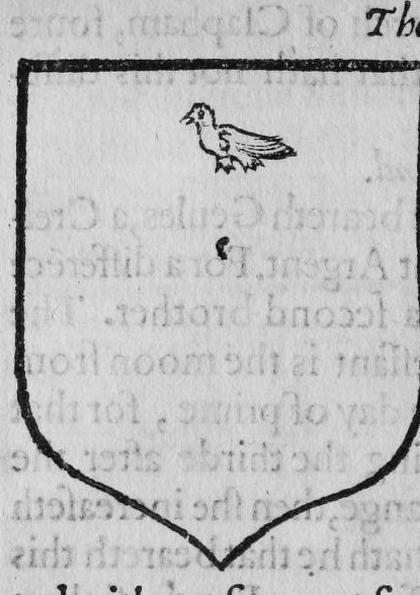 He beareth Or, a Martelet Sable, for a difference of a fourth brother, The Marti-let breedeth and dwelleth in anciẽt houses of honor, as castles, and Towers, yea and when the Lordes of them haue forsaken them, yet dwelleth the Martilet there. These birds are, and haue bin made and pain-ted without feet, not for that they lacke but hauing legges and feete, they vse them not. Wherefore _Pi-nie_ saieth, that they are Martlets which haue good feete, and do not vse to go but ride. The legges of the Martelet are hairie. He neuer sitteth on tree, but when he lighteth he lighteth on his wings, which are somewhat longer, then to answere to the pro-portion of the bodie. There is no bird that deligh-teth in mans companie on the sea, so much as hee. For if the Mariners saile neuer so farr, he neuer par-teth from the ship, till they be arriued, _Plinie_ saith al-so that in India, they are called the birdes of para-dise. So this fourth brother, because hee is so farre from the house of inheritance, he must be a traueller on the sea, a horsseman in field, or a worthie Cap-taine of a castell, and so to liue gentlemanlike, and aspire to honour.
Fol. 109r The fifth.
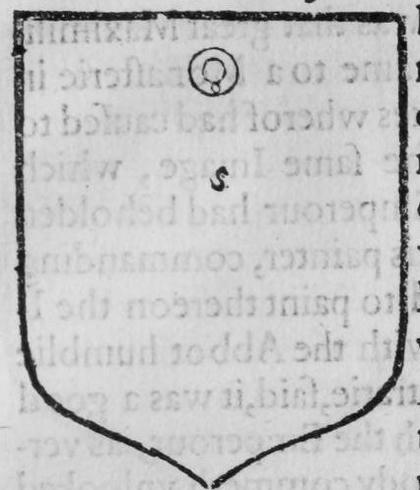 He beareth Sable, an An-nelet Or, for a difference of a fifth brother. This is a ring, such as men weare on their fingers, or such as were made for the breast-lap of _Aaron_ & the Arke which were of fine gold. _Plinie_ saith, that _Iupiter_ (for to keepe in memorie the punishment of _Promotheus_, for that hee deceiued the goddesse of the Element of fyre, and did bring it to mans vse, made a ring with a stone therein and ware it. In like forte, are they vsed for remembrances. _Plutarch_ writeth of a ring with a precious stone, which was taken from _Pompey_ the great, when he was slaine. That ring saith he made _Cæsar_ weepe, when he bare it on him. That ring had grauen in it a Lion bearing a sword. But in these daies some gentilmen wil not haue any token of armes grauen in their rings, (which were much to their worship) but rather a grauen image, or a likenes of a charnell of a man, which they term death. If death were of gold, as that is, there is many that would run to imbrace him, that now flyeth a-waie from his leane lookes. But yet their good en-tent in this is not vnlike vnto the Egyptians: who when many of them came together to banquet and be merrie, one amongst them bare the like image & shewing it would say beholde and reioice. For like as this is to daye, such shalt thou be to morrowe.
Fol. 109v But of contrarie opinion was that great Maximili-an the Emperour, who came to a Monasterie in high Almaime, The Monkes whereof had caused to bee curiouslie painted the same Image, which when that well learned Emperour had beholden a while, called vnto him his painter, commanding to blot the same out, and to paint thereon the I-mage of a foole. Wherewith the Abbot humble beseeching him to the contrarie, said, it was a good remembrance. Nay quoth the Emperour, as ver-mine that noyeth mans body commeth vnlooked for: So doth death which here is but a fayned I-mage. And life is certaine, if a man haue deserued it. The Senators and Kings ware rings in remem-brance of honour they were called to. So this fifth brother hath this difference, in memorie of his birth, which with faithfull seruice to his Prince, may be called to honour.
The sixth.
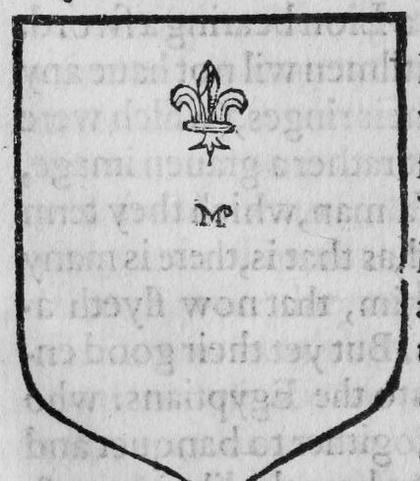 He beareth Sanguine a flo-wer deluce Argẽt, for a difference of a sixth brother. This Flower of all other, hath most diuersitie in him and therefore is likened to the Rainbow. But the prin-cipall colour, I meane that hath most maistery in him is Blewe. The signification whereof is stedfast truth, in which the bearer ther-of should florish as this flower in the fielde, accord-ing to the saying of _Dauid_.
Fol. 110r The seuenth.
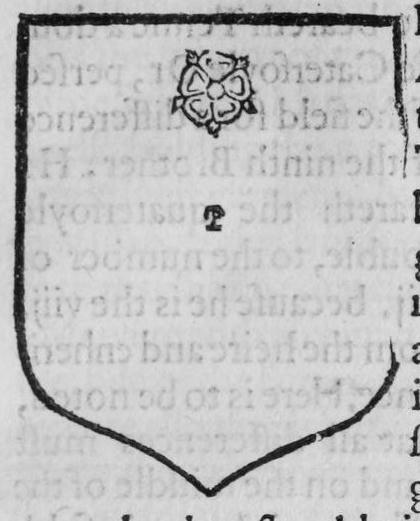 He beareth Purpure, a Rose Argent, for a difference of the seuenth brother. This rose may not be dou-ble, but as ye see here sin-gle. His seuenth Sonne, may haue for his difference a Rose of this fashion, with in this Rose, and shal be of some other colour, as ima-gine it were Verte. As for example, then shoulde it be thus blazed. He bea-reth Purpure, a Rose Vert, within a Rose Argent, for the difference of the seuenth sonne, of a seuenth brother.
The eight.
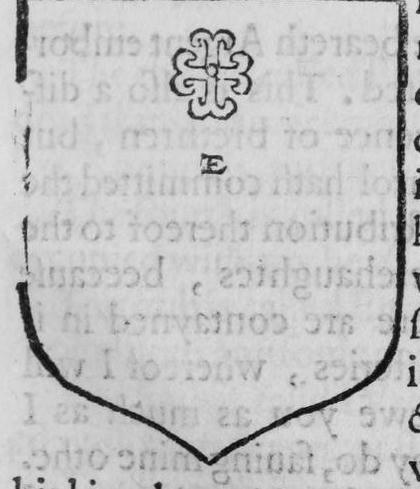 He beareth Ermine a crosse moline Or, for a difference of an eight brother, As this crosse hath viij. ends. So is it to this viij. brother, a to-ken of the eight blessed re-wardes (not to bee vnder-stande of the worldly) that is power, Incorruptible, vi-ctorie of enheritance, glad with grace, to see God in his kingdome. And so to endeuour himselfe, be-cause he is farre from the patrimony, it behoueth him to be spirituall.
Fol. 110v The ninth.
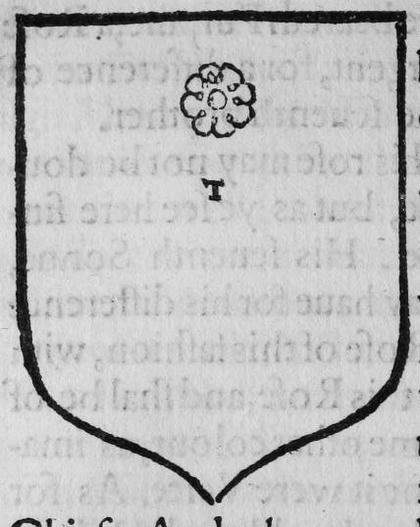 He beareth Tenne a dou-ble Caterfoyle Or, persed of the field for a difference of the ninth Brother. He beareth the quaterfoyle double, to the number of viij. because he is the viij. from the heire and enheri-tance, Here is to be noted, that all differences must stand on the middle of the Chief. And when any difference is borne in field, either vpon any Banner, Standard, Banaroll, Guy-don, Pinion, Ensigne, Coronet, or Penounsel, Stre-mer or Flagge on the water, the difference I saye, must be as bigge, as to bee well descerned iij. staues lengthes off, euerie staffe contayning xviij. foote of Assise.
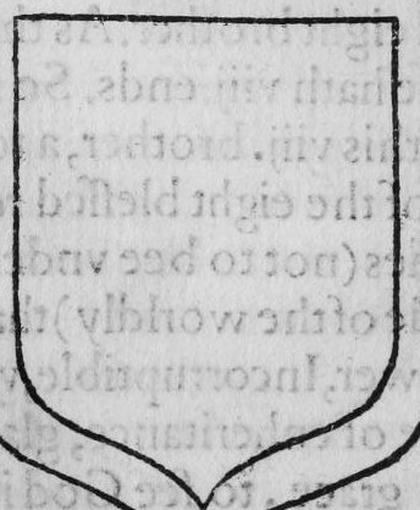 He beareth Argent embor-dured. This is also a difference of brethren, but _Bartol_ hath committed the distribution thereof to the Herehaughtes, because there are contayned in it misteries, whereof I will shewe you as much as I may do, sauing mine othe. This sometime is termed emborduring, because it is of the same, that the field is off. And if it were of any other colour, or mettall, then Fol. 111r then should you say, a bordure, the content where-of is the fift part of the fielde, and is meant to bee a garde, whereof _Moses_ spake vnto the children of I-sraell, bidding them to make gardes in their quar-ters of their garments, & vpon them Ribands of yel-low silke. If this bordure that I speake of be in any cote, that shall be marcialled with an other as to be a Mariage with any man, or maried to any woman: the side of the same adioyning shalbe left out: if a-ny cote also that is bordured, bee honoured with a chiefe, the chiefe part of the bordure shalbe left, and the chiefe it selfe shall ioyne close to the Cote, as though it were no bordure, whereof ye haue nine sundrie sortes.
The first is plaine, as abouesaide commonly cal-led embordured, or emborduring, and is euer of the same colour that the field is off.
The second is composed or counter-componed whereof you haue example of crosses so named before.
The third is called Entoyre, the which is, when dead things do occupy the same bordure, as mol-lets, Roundels, and such like.
The fourth is called Enurney, that is, when it is occupied with any beast.
The fifth is called Enaluron, and when it is oc-cupied with any foule or bird.
The sixth is called Verdoy, as when it is occupi-ed with fruits, leaues, or slippes.
The seuenth is termed Purssleu, which is, when the bordure is occupied with any of the nine furres afore rehearsed.
Fol. 111v The viij. is diepre, as being Fret, when that within the Frettes, there appeareth somwhat, either quick or dead.
The ix. chekred, the which appeareth euidentlie in the crosse so blazed, if the field of the bordure doo alter from the cote, as it may do as well in other, as in compone, counter-componie, and checker, it must needes, then you shall say, a bordure and tell whereof, Further here is to be noted, when any bor-dured cote is marshalled in the middelt, as between two other cotes, or between foure other then there must be no part of the same bordure diminished. If I should say here as I might, there could I haue oc-cupied only for bordures, 50. escocheons, but that the printer thinketh, that they woulde make the booke too deere, I am constrained to leaue off, and because my cutter is gone beyond the Sea, There-fore I will end the sooner with you. For you shall haue but one escocheon, and one badge, and then I will release you of your paines.
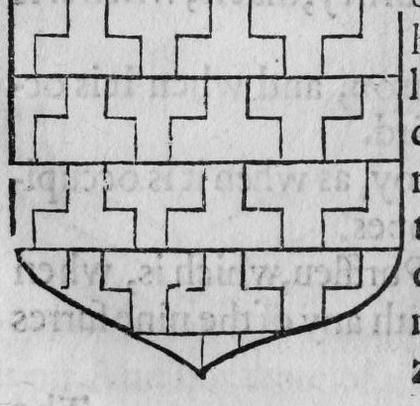 He beareth Meirre Argent, and Azure. Some olde Herehaughts haue taken this for a doub-ling, and yet they woulde call it varry cuppe, and var-rey tassa which is as much to say, as furre of Cuppes, or of goblettes. But that might be called on old bla-zone, and vsed very late in the Fol. 112r in the euening, especially about S. Martins tyde. Well, let that blazon go, and vse this word Meire, for so is it well blazed, and verie auncient, and is a Spanish Cote most commonly.
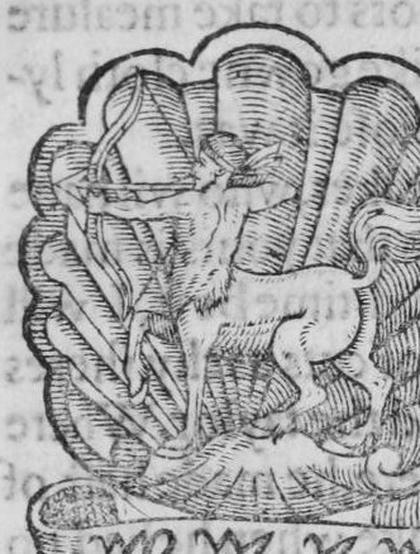 This badge is a Sagittarie Geules, within an Escalop Argent set on his name or worde, This is the badge of an Esquire of England. If you meruaile why, I set not the same vpon a wreth as now it is most vsuall, I say to you, in the time of king _Henrie the fifth_, and long after, no man had his badge set on a wreath, vn-der the degree of a knight. But that order is worne away and euerie man weareth at this day, as hee listeth, not so much as the Taylour and shoma-ker, but wil be as gentleman like, as the gentleman himselfe. I reade a pretty storie of Sir _Philip Caul-throp_, a worthy knight of Norwich, in the time of King _Henrie the vij_. The which, for that I do with eche man to be knowen as hee is: I will declare his doing in that point to you, as a patterne for Gen-tlemen to reproue such, as like Apes counterfait that, as appertayneth not to them. This Knight I say, bought on a time, as much fine french tawny cloth, as should make himselfe a gowne, and sent it to the taylors to be made, _Iohn Drakes_, a shoma-ker of that towne, comming to the sayde taylours and
[Marginal note in an early hand:] The Apelles: no understanding of Crests borne by them selues. For I haue sundry ancient Seales of my Ancestours in Ed. 3. tyme, & R. 2. when the cote of Armes, & crest ouer the same (commonly is) is set vpon an Helmet both with wreath & mantle.
Fol. 112v and seeing the knights gown cloth lying there, lik-ing it well, caused the tailor to buy him as much of the same cloth and price, to the same entent, And further bad him to make it of the same fashion that the knight would haue his made off. Not long after the knight comming to the tailors to take measure for his gowne, perceiuing the like gowne cloth ly-ing there, asked of the tailor whose it was. Quoth the tailor it is Iohn Drakes, who wil haue it made of the selfe same fashion that yours is made off. Well said the knight, in good time be it, I will said he, haue mine made as full of cuts as thy sheres can make it, It shal be doone said the taylor. Where vpon because the time drew neere, he made hast of both their garments. Iohn Drake when he had no time to come to the tailors till Christmas day, for seruing his customers, when as he hadde hoped to haue worne his gowne, perceiuing the same to bee full of cuts began to square with the Tailor, for the making of his gowne after that fort. I haue done no-thing quoth the Tailor, but that you bade mee, for as sir Philip Caltrops is, euen so haue I made yours. By my latchet quoth Iohn Drake, I wil neuer were gentlemans fashion againe. In mine opinion the knight serued the cobler right well as he had defer-ued. Approuing the opinion of Apelles, who taught the shoomaker no further to meddle then with his slipper. Le. I pray you tell mee are badges auntient. Ge. I will shew you nine sundrie badges, and wil referre the antientnes therof to your owne iudgmẽt.