Variations of the lines
So by that meanes a Gentleman by patent, will haue his doubling as rich as a Baron or a Knight of the Garter, vnder which Fol. 77r which two degrees, none should double with Er-min. But there is a good hope, that the Earle Mar-shal of England, wil see to the amendement thereof, as of other things that are out of order, Whereof moorning at burials is not one of the leaste, at this day. For you shall haue an artificer, such one as is no gentleman, shall giue to his buriall eight black gownes with hoods, and al they shalbe moorners, And an earle by law and order of armes, may haue no mo. Many of those abuses were wel reformed in K. Edward the firsts time, by earle Th. of Lancaster, Leycester, & Darby & constable of England. This noble mã ordained by special reformation, that no mã should were a hood on his shoulder in the time of moorning, except he were a gentleman, but on-ly a tippet of three nailes breadth. Also that no par-son, curat, churchwardens or others, shoulde pull downe any acheuement, cote of Armes, or Pinion, or erase any Toombe out of Churches or church-yards: And that no goldsmith, coppersmith, glasier, painter, or marbler, should haue to doo with armes without the consent of the king of Armes of that prouince, And that they should not set any march-ants mark within any scocheon. And that this shuld be the more diligently looked to, he ordained, that al the kings of armes, should keepe their Chapters once euery quarter of the yere at the least. And that they should make their visitations in their prouin-ces, or their Marshals for them, euery vij. yeere. To conclude, he ordeined that the Herehaughts, at the enterment of euery gentleman (where they were called to that seruice) should take the pedegree with diligent Fol. 77v diligent examination of olde folks then liuing, and to record the same. Le. If Herehaughts had, and haue done so, they woulde not then be so farre to seek as some of them are when a gentleman of an-cient bloud commeth to see his pedegree, or what his auncestors did beare. Ge. There is many causes thereof, whereof one is that they haue no one seue-rall house, where they might plant their offices, and in that place to make their libraries for their prouin-ces, For as they are now here, now there, so when they die, their wiues (which is contrary to their pro-session, for they are as aunciently wiued as the sixe clarkes, but not so lawfull) then selled for a little money, their books of visitations which cost them much trauail. Neither are they called to the buriall of diuers gentlemen of auncient houses, and espe-cially of such as dwell farre off in the countrey: but the worst of all hath bin ryot and rebellion, as in former yeres begun in king Richarde the secondes daies Jack Straw, Wiliwawe, & their companions, In the time of king Henrie the sixt, Iacke Cade, In the raigne of king Edward the fourth, the bastard of Fawconbredge, and Geffrey Gate, In king Henrie the seventh his dayes, Parkin Warbeck & the black Smith. All which with their accomplices haue de-faced Law and Armes. Le. Amongest all this rascall rowte, that you haue spoken off, me thinke you should leaue out Geffrey Gate, because I reade of nothing that he did, but spoiled Beere-houses at S. Katherins, & that was but twise, which was, either for brewing too much to their customers beyond the Sea: or for putting too much water in that they serued Fol. 78r serued on this side the Sea: or else for both, which is as well vsed as it was before. Ge. Although he him-selfe did no harme to bookes, yet when a number of light heads are vp, some doth one mischiefe and some an other. For they are not all of one dispositi-on, Whereof I leaue, constrained by griefe, to heare that such antiquities, should be defaced. Now I will shew you of nine sundry mesles, which are so called because they entermeddle the one within the other, contrary to the plaine partition.
The first.
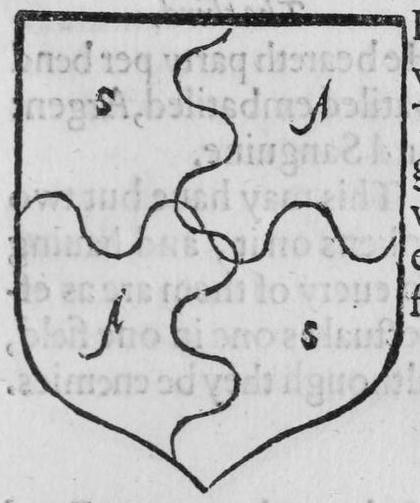 He beareth party per crosse wauey Sable, and Argent. This cote may not be char-ged in the foure quarters with any rauening beast, except he lye ouer all the field.
The second.
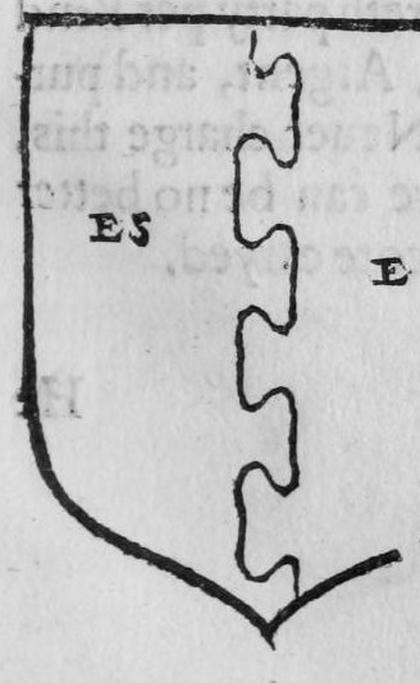 He beareth partie per Pale Nebule Ermines and Er-mine. Any thing contrarie combatand in this, beati-fieth the same, or else it is better as it is.
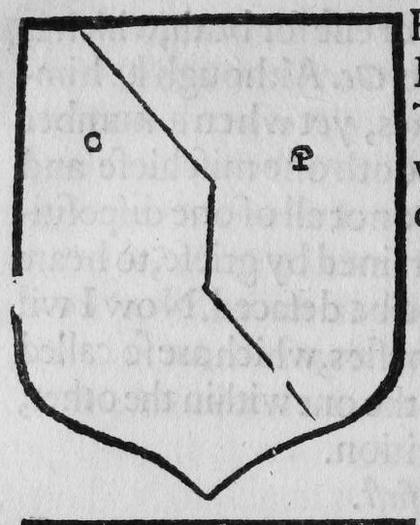 Hee beareth party per Pale Beuile, Or, and purpure. This may not be occupied with any thing, except it be counter-Semis.
The third.
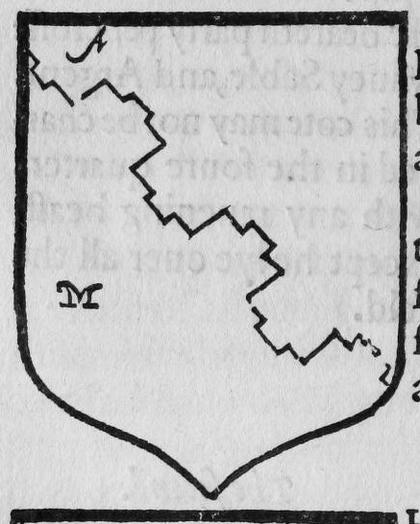 He beareth party per bend batiled embatiled, Argent and Sanguine. This may haue but two tokens on it, and hauing so euery of them are as effectual as one in one field, although they be enemies.
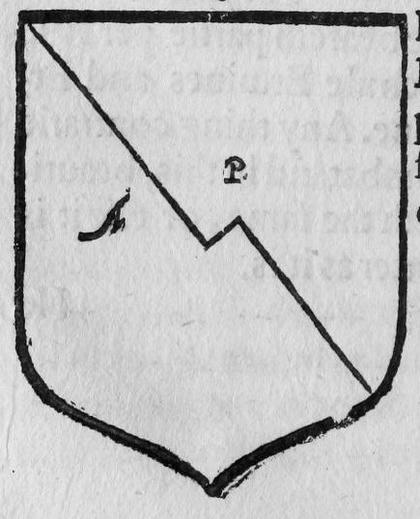 He beareth party per Bend Beuile, Argent, and pur-pure. Neuer charge this, for there can be no better cuned cote caryed.
Fol. 79r The fourth.
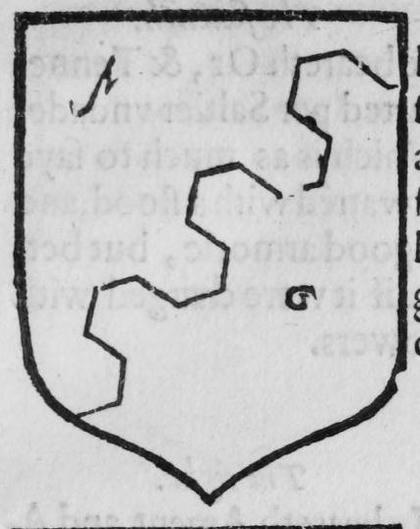 He beareth party par bend sinister Champian, argent and Ceules. Any thing set in triangle on this cote, honoureth the same, to a great increase of commen-dation.
The fifth.
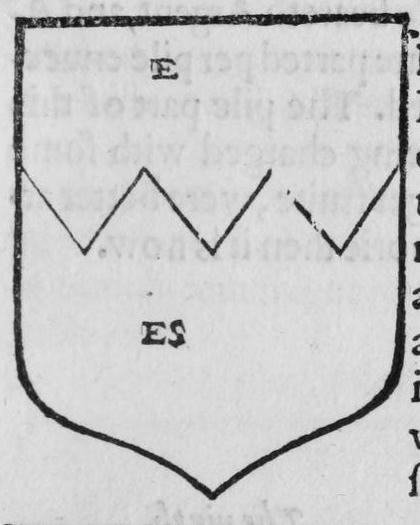 He beareth Ermine, and Ermines, parted per Fesse déted. This is called Len-tally. If you be a gentle-man of a first cote armour, and the Prince giue you addition, you may choose if you wil part your owne with the other on this fashion.
The sixth.
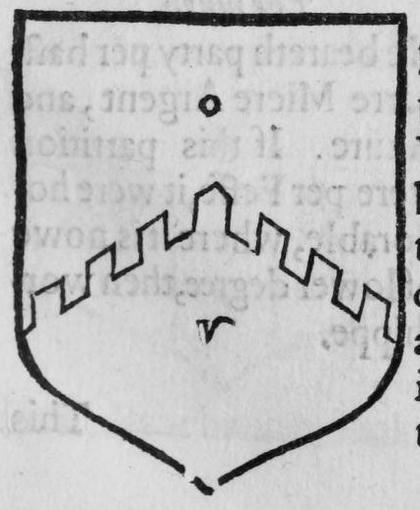 He beareth party per Che-ueron, embatiled, Or, and Vert. A triangle of anie bird or foule, setteth forth this cote, and maketh it double so faire, as it is now and yet now of it selfe, it is ancient without anie o-ther addition.
Fol. 79v The seuenth.
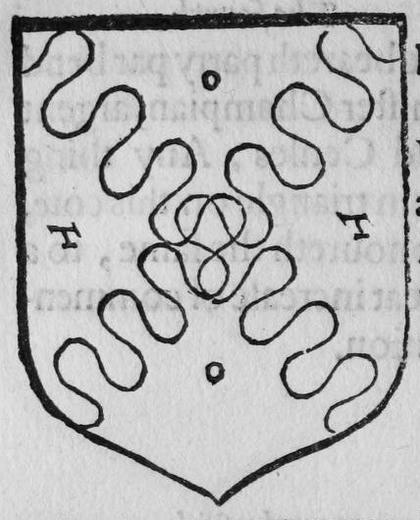 He beareth Or, & Tenne, parted per Saltier vndade, Which is as much to saye as watted with a flood, and is good armorie, but bet-ter if it were charged with flowers.
The eight.
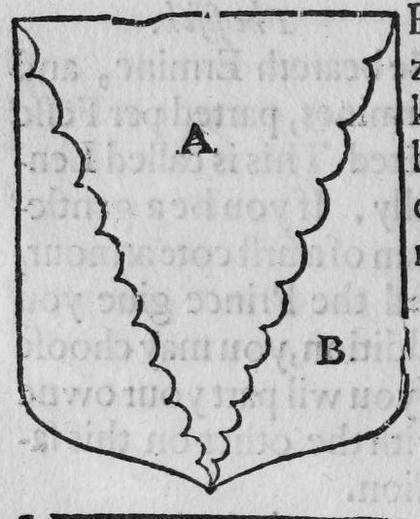 He beareth Argent, and A-zure parted per pile enuec-ked. The pile part of this being charged with some egar fruite, were better ar-morie then it is now.
The ninth.
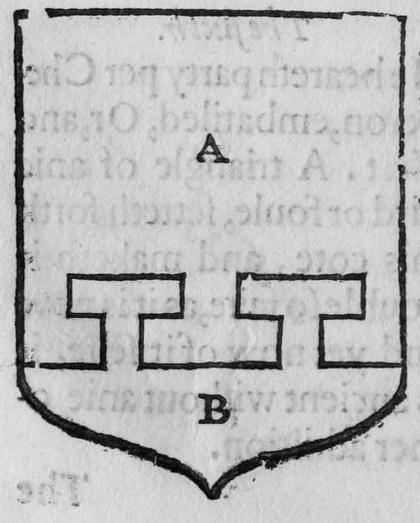 He beareth party per bast, barre Miere Argent, and Azure. If this partition were per Fesse, it were ho-norable, where it is nowe of lower degree, then wor-shippe.