Knighthood and the office of arms
G. Well because your author is good, I will not stand against you in that, but to proceede in my purpose, this shielde I say, was the armes of that GenFol. 38rGentleman Sir Albone, knight of the Bath, and Lord of Verolame now called saint Albones, who in his youth, for the honour of this Realme, made a Royall challenge of Iusts at Rome, and did there other knightly disportes in armour, where he onely had the price, and was made knight by Dioclesian then Emperor, who had this Realme in subiection. This Albone (I say) was Prince of knights, and Soueraigne Steward of Britaines, & afterward was conuerted to the faith of Christ, by that holy knight, Amphibalus, whereof I will shew you the historie, in such fort as I haue read the same. Seuerus, Prince of knights of this Realme, sent to Rome, Basfianus his sonne, with xv. hundredth Lords sonnes of Britaine, Wales, and Cornwale amongst whom, Amphibalus was, where that good man Zepherinus, then Bishoppe of Rome, priuily taught vnto him the faith of Christ, and confirmed the same with baptisme. This Amphibalus, at his returne into this Realme, repayred to the pallace of Albon, being then soueraigne Steward of Britaine: who by conference of olde acquaintance, taught Albone that faith, that hee before had learned. To make shorte, they both encreased so much therein, as they boldly died in the same quarrell. Le. Why did he go to Rome then, to be made knight? Ge. When Iulius Cæsar had the possession of this land, he made a statute, that no man should receiue knighthood, but onely at Rome, The cause was, he shoulde be sworne to the Emperour, neuer to rebell, as well appeareth in the articles of the Othe, vnder written, Le. I pray ye tell me, if you can instruct me of the Fol. 38v the order of that knighthood, with the circumstance thereof? Ger. Though I haue staied a while from dooing my promise: now I will according to the same, shew you the order of the knighthood then vsed, which was of the Bath. Vigetius saith, there be two maner of knighthoods, One with the sworde, and an other with the Bath. He affirmeth, that the Bath is the worthiest, because of foure royalties. Le. I pray you, or ye go any further, shew those foure royalties, Ger. The first is, at the Coronation of an Emperour or Empresse. The second is, at the coronation of a king or Queene. The third is, at the creation of a Prince. The fourth is at the meeting of two Emperours or kings, when one of them shall come into the others Realme in peace. Now as I was about to tell you.
First, the day before those knights should receiue their knighthood, they should be shauen, in token to auoid all vicious liuing and dishonestie,
2 They should enter into a bath of cleare water to make their bodies cleane.
3 They should also do on cleane shirts.
4 They shoulde also bee clothed in a mantell of redde, in token, that they should not let to shedde their bloud for the common wealth of their countrey.
5 Then should they assemble besides in an oratorie dedicated vnto Mars: in the worship of whom, they should watch all that night.
6 The morrowe after, at the rising of the Sunne, they should appeare in the oratorie of the goddesse Bellona and there to continue in diuine oration.
Fol. 39r 7 The Emperour girts about euerie one of them a sword, giuing vnto them a charge conteining these ten articles following.
1 The first was, to keepe their bodies cleane, for life or death, both in peace or warre, and alwaies to preferre the common profit of the Emperor.
2 The second to worship their gods, and to defend them. Not to be where false iudgment should pas.
3 The third, to saue the liberties of the temples.
4 The fourth, to defend the right of the Priestes, Widowes, Maidens, and poorefolke.
5 To make peace of long debate.
6 The sixt, to spend their bloud in the defence of the comminaltie.
7 The seuenth, to eschew worldly desire and idlenesse.
8 The eight, to pursue armes, for knightlie exercises.
9 The ninth to plight their trouth to their Captaines and rather to die, then to breake any of their Statutes.
10 The tenth, to sustaine the troth euery where, & neuer to beare armes against Rome. Sithens therefore I haue told you what erst I promised, somwhat digressing from our first intended purpose, I wil resort againe where I left, instructing your further in the rules of blazon.
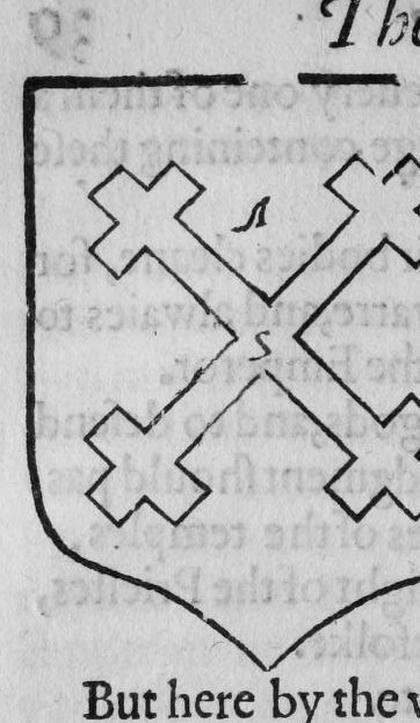 He beareth _Argent_, a Saltier crossed _Sable_. This is commonly called, Saint Iulians crosse, The Bruers of London, bear the same cote, martialled with an other, as though they had maried together, where the history telleth that she was not maried, but martyred a virgin.
But here by the way, Eusebius generally writing of the Crosse, sheweth how Constantine caused the figure of the crosse to be borne before his souldiors in battell. That they by the sight thereof, might ceasse from the vaine worshipping of their false goddes, and honour the verie true God, which he himselfe worshipped. Wherefore he appointed certaine standard bearers, which should bear vpon their shoulders, the figure of the Crosse by course throughout all his armie. I could saie something offemy de crosses, but because they haue bin counted prodigious, I will for this time passe it ouer. Le. I pray you leaue off, & shew me some other lesson, For you vse me like a dul scholler, to keepe me at the Christ-crosse-row a whole weeke together. Wherefore as it hath pleased you to enterlace the blazon of Armes with the knowledge of other things: So would I likewise desire at this time to knowe howe officers of Armes were first made: and whether they were called Herehaughtes, as nowe they are. Ge. At the first, there were certaine knightes Fol. 40r knightes called Auncients, such as had serued in the warres xx. yeeres at the least, who being sore brused, lamed, and wel stept into yeres (those I say) were made by Emperours and Kings, the Iudges of martiall actes, and of the Lawes of Armes, as of Conquestes, Fieldes, Battailes, Assaultes, Rodes, Combates, Turneyes, Encounteringes, Recountrings, Rescues, Challenges, and triumphes. These were not onely electe for their cunning in that behalfe, but for their vertuous life, and sage Counsell. For as Vpton saith, they gaue Counsell without perill. For the which, they were of all Estates worshipped. But in processe of time, as yee see in this world that there is no stay of life, so they ware out. And after them succeded Herehaughts (which by interpretation is as much to say, as old Lords) and were so called for vertues of them, and the honour of their seruice. These if they be not Ciuilians, yet are they greatly priuiledged by that Lawe. For the Law of Armes is most part directed by the Ciuill Law. Of these officers of armes I say, at this day are sundrie sortes, and that of sundrie seruices, and are diuersely created and made, whereof I will shew you, beginning at the lowest, with Vptons owne wordes. It is necessarie, saieth hee, that all estates should haue Currours, as sure messengers for the expedition of their busines, whose office is to passe and repasse on foote, being cladde in their Princes colours parted vpright, as the one halfe white, and the other blacke, like as the Sergeant at the Law do giue their Liueries in time of their feast. These I say, haue the Armes of their Soueraignes painted Fol. 40v painted on their boxes, the which should be fixed to their girdle, and set on the raine of their backe, on the left side. It is not permitted to them to beare the Armes of their Lorde, in any other fort, these are Knights in their offices, but not nobles, and are called knights Caligate of Armes, because they were startuppes to the middle legge. These when they haue behaued themselues wisely, and serued worshipfully in this roome the space of vij. yeeres, then were they set on horsebacke, and called Chiualliers of Armes, for that they rode on their Soueraignes messages. Then were they cladd in one colour, with their garmentes garded of the colour of their Soueraigne bearing their boxes, with their soueraignes Armes painted thereon, on the lefte shoulder, and not else where. These must be so vertuous as not to be reproued. For Salomon sayth, an vngodlie messenger, falleth into mischiefe. These are made by the Herchaught of that prouince, by the taking of the boxe from his girdle, and putting it to his left shoulder, and to see whether hee can ride, ministring vnto him a special Oth. The knight Chiuallier humbly kneeling vpon his knee, in the which time of receiuing his Othe, he shall haue no spurs on.
A Purceuamt.
When he hath serued in that roome vij. yeeres, if his soueraigne please, hee may exalte him one degree higher, which is to bee created a Purceuant, that must be done with somewhat more solemnity, and on no lesse feast day, then on a sunday, in Fol. 41r in such fort as followeth, The herchaught of arms, of the prouince that he must be pursueant too, indued with his Princes cote of Armes with his left hand, holdeth the pursueant by the right hand, in the maner of a leading. The same Herehaught beareth in his right hande a cuppe of siluer, filled with wine and water commixed, and drawing neere vnto his soueraigne, of whom (in the presence of manie witnesses to this called) he asketh of his sayde Soueraigne, what is the name of his Pursueant, the soueraigne telleth the name, by the which name the Herehaught createth him, powring on his bare head some of the wine and water aboue spoken off. Then he putteth ouer his head, vpon his shoulders a cote of the armes of his soueraigne, ouerthwart, that is to say, the manches of the cote, to be on his breast and backe. On that fashion shall he were the same, as long as he is pursueant, & none otherwise. But here I leaue out the Othe that should be ministred vnto him, for lengthening of the time. After which Othe ministred, the Soueraigne giueth vnto him the cuppe wherewith he was created, which he beareth in his right hande vntill he come out of the Pallace. This Pursueant when he rideth must weare blacke spurres, the which he must haue on at the time of his creation. And when hee hath serued any time, he may at the pleasure of the prince, be created an Herehaught, euen the next day after he is created Pursueant, which is done in this order.
Fol. 41v The Creation of an Herehaught.
An Herhaught, is an high officer in all his seruices, as in message, For as Angels haue passed from God to man, as appeareth in the scriptures, & haue done messages of sorrow, as of most heauenly and earthly ioy: euen so are these Herehaughts messengers from Emperour to Emperour, from king to king, and so from one prince to another, sometime declaring peace, and sometime againe pronouncing warre. These, like Mercure, runne vp and downe, hauing on them, not onely Aarons furcut, but his eloquence, which Moses lacked. Wherefore I say, the Herehaught is not created but onelie at the hands of the Prince, Before which creation, he shal haue his admonition giuen him by the secretary of the same prince, as in these ten articles hereafter followeth.
1 You shall be readie in your apparell of armes at all Coronations, creations, and christenings. And in all high feasts, and with all your power, you shall giue instructions of the same, to all officers of armes seruing vnder you.
2 You shall giue your selfe to your learning, and teach officers vnder you, of al seruices appertaining to honour.
3 Ye shall bee expert, in betrouthing of Princes and Princesses, as well as in numbring of the people.
4 Ye shal make oft visitation, of kingdoms and prouinces.
5 You shall honour knighthood, and all the actes there-Fol. 42rthereof.
6 You shall not suffer one gentleman to malign another: and raylyn g you shall let to the vttermost of your power.
7 In doing of armes and martiall actes, you shall fauour no partie, but make true report.
8 Ye shall be at all publike proclamations, done on your Princes behalfe, in his cote of armes.
9 Ye shall not disclose the secretes of Ladies or Gentlewomen, to any man or woman, whatsoeuer you know by them.
10 Ye shall flee tauerns & hazerding. The Prince then asked him, whether he bee a Gentleman of bloud, or of a seconde cote armour: if he be not, he endueth him with landes or fees, and assigneth vnto him and his heires a congruent armes, Then like as the messenger is brought in with the Herehaught of his prouince, so is this Purceuant brought in with the eldest Herehaught: who at the commandement of the Prince, doth all the solemnnities, as to turne the Cote of armes, setting the manches thereof on the armes of the said Purceuant, and putteth about his necke a coller of SS. The one S. being Argent, the other S. Sable, And when he is named, the Prince himselfe taketh the cuppe from the Herehaught, which cuppe is all gylt, and powreth the water and wine vppon the head of the saide Purceuant, creating him by the name of an Herehaught, which when the oth is ministred, giueth the same cuppe that hee was created withall, vnto the same newe Herehaught: who bearing the same in his right hande, maketh a larges Fol. 42v larges in the hall of his Soueraigne. For it is sayde of the Philosopher, the liberall reward of a Prince, is not to be knit in a sacke, as was the cuppe, that was founde in Beniamins sackes mouth, for the which, he and all his brethen promised bondage. Thus ende I of the Herehaught, who taketh his name of age, which as Salomon saieth, is a crowne of worship. Le. I thanke you for this: now I pray you shew me of blazon, what ye will. Ger. I will shewe vnto you of foure sundry acheuements, the which I meane to do, onely for your learning. And because I must begin with the acheuement of a duke, I haue therefore set foorth the acheuement of Thomas Lord Haward, the second of that name, Duke of Norfolke: and Earle Marshall of England, for that that all painters shall learne to do those things orderly: for armes are not to bee done by euerie painter: sometime, although he be cunning in his Arte, yet in dooing of Armes he may commit errour. Le. I pray you ere you goe any further, shewe me what you meane by that worde acheuement. Ge. It is the armes of euerie Gentleman, well marshalled with the supporters helme, wreath, and creast, with mantels, and the worde the which of Herehaughts is properly called blazon, heaume, and timber, as appeareth here at large, not only blazed by the seuerall coates, but by the names appertaining of antiquity to the same. And thus you shall vse your selfe in the blazon thereof.
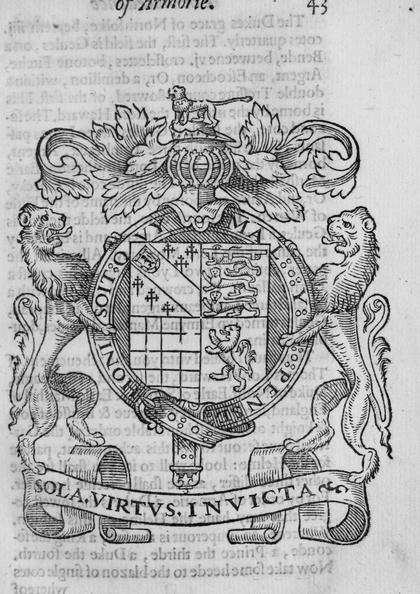
Fol. 43v The Dukes grace of Northfolke, beareth iiiij. cotes quarterly. The first, the field is Geules, on a Bende, betweene vj. crosselettes, botone Fitche, Argent, an Escocheon, Or, a demilion, within a double Tressure counterflowred, of the first. This is borne by the name of the Lord Haward. The second cote, the fielde is Geules, three Lyons passants, Or, a file with three Lambeaux, Argent, borne by the name of the Lord Brotherton, Earle Marshall of Englande. The thirde cote is Checky, Or, and Azure, and borne by the name of the Earle of Warren. The fourth cote, the fielde thereof is Geules, a Lyon rampand, Argent, and is borne by the name of the Lord Mowbrey. All within the garter, cotised of two Lyons Argent, his creast a Lyon passaunt, Or, crowned and coulored with a file, and three Lambeaux, argent, set on a Chapeau, Geules turned vp Ermyne, Mantelled Geules, doubled Ermins.
Thus haue I blased vnto you, the acheuement of Thomas Lord Haward, the second of that name, Duke of Norff. Earle of Surrey, & Earle Marshal of England, lord Mowbrey Segreue & Brusse of goie & knight of the most honorable order of the Garter. I haue set out to you this acheuement, partlie for the Helme: looke well to it, yee shall see the other three differ, as yee shall perceiue hereafter. For by order of Armorie, a Duke is the lowest degree that may haue the Helme on this fashion. Whereof, an Emperour is the first, a King the seconde, a Prince the thirde, a Duke the fourth.